
Professional Termite Treatment & Chemical Barriers in Perth
Dealing with termites in Perth requires prompt action, sound diagnostic assessment, and a treatment plan suited to your specific property. Fix4U Pest Control And Termite Treatment Perth provides professional termite management services across the Perth metropolitan area, including targeted active termite treatments, long-term chemical soil barriers, and underground reticulation refills.
Whether you have uncovered active termite mudding during renovations or need to replenish an existing protective barrier around your perimeter, our team delivers practical, effective solutions designed for Western Australian building designs and soil conditions.
What to Do If You Find Live Termites in Your Home
Discovering termite activity inside your house can be stressful, but taking the correct immediate steps makes a substantial difference to the success of subsequent treatment.
Leave damaged timber, mud tubes, and wall cavities untouched. Termites are sensitive to light and airflow. If workings are broken open, termites withdraw, making diagnosis and targeted treatment harder.
Aerosols kill surface insects on contact, but the strong repellents cause surviving termites to retreat and move deeper into concealed wall cavities and ceiling timbers elsewhere in the building.
Note any dripping garden taps, hot water system overflows, or leaking pipes. Termites require constant moisture, and fixing leaks is an essential step in preventing re-infestation.
Contact a qualified technician as soon as possible to identify the species, locate concealed entry points, and map out an effective eradication plan.
Our Termite Treatment Solutions
Every property presents unique construction features, soil profiles, and risk levels. At Fix4U, we do not apply a rigid, one-size-fits-all approach. We evaluate the structure and select from three primary treatment methods:
Active Termite Colony Treatment
When live subterranean termites—often referred to locally as part of a white ant treatment in Perth—are actively feeding inside timber framing, door jambs, or skirting boards. In Western Australia, "white ants" is the common colloquial term for subterranean termites. The priority is stopping structural consumption and managing the active population.
Chemical Termite Soil Barriers
When an existing dwelling requires a continuous protective treated zone excavated or drilled around its external foundation perimeter to deter concealed subterranean access through footing lines.
Termite Reticulation Refills
When a home has a functional, pre-installed underground perforated pipe network (such as Altis, TermX, or Camilleri) that has reached its scheduled recharge timeframe, allowing replenishment without digging.
Active Termite Treatment
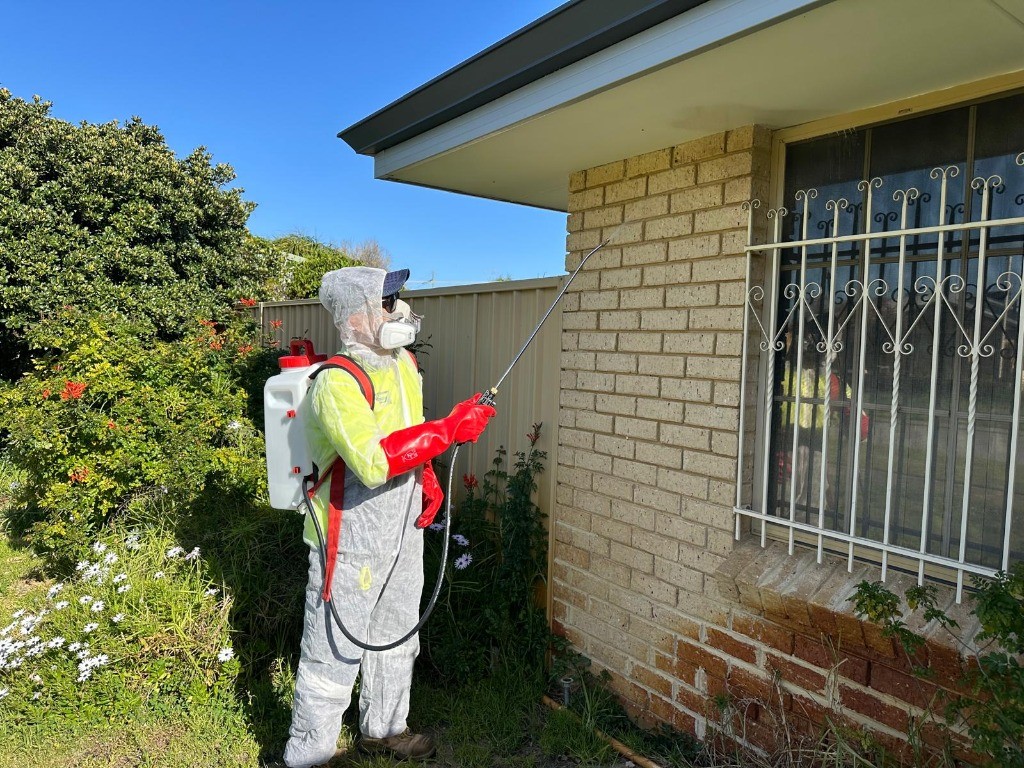
Treating live termites inside a building requires targeted application. Simply treating the external perimeter will not necessarily resolve an active infestation that is already established and feeding within internal roof or wall timbers.
Fix4U uses Termidor (active ingredient: fipronil) for active termite management. Depending on the location of the activity, the technician may apply low-pressure formulation foam or direct chemical treatments into active mud shelter tubes and hollowed timber galleries.
Because fipronil is non-repellent, foraging termites continue moving through the treated zone without detecting the chemical. As they return to their workings and interact with other colony members through mutual grooming and food sharing, the active ingredient is transferred across the population.
The goal of active treatment is to arrest timber consumption quickly and manage the infestation before or alongside broader perimeter barrier work. Following an active treatment, the technician reinspects the workings to verify that activity has ceased before recommending long-term preventative measures.
Chemical Termite Barriers in Perth
Installing a chemical termite barrier in Perth establishes a continuous zone of treated soil around the exterior perimeter foundations of your home and around vulnerable service penetrations. Its primary purpose is to deter termites from gaining concealed access to structural timbers.
How a Chemical Barrier Is Installed
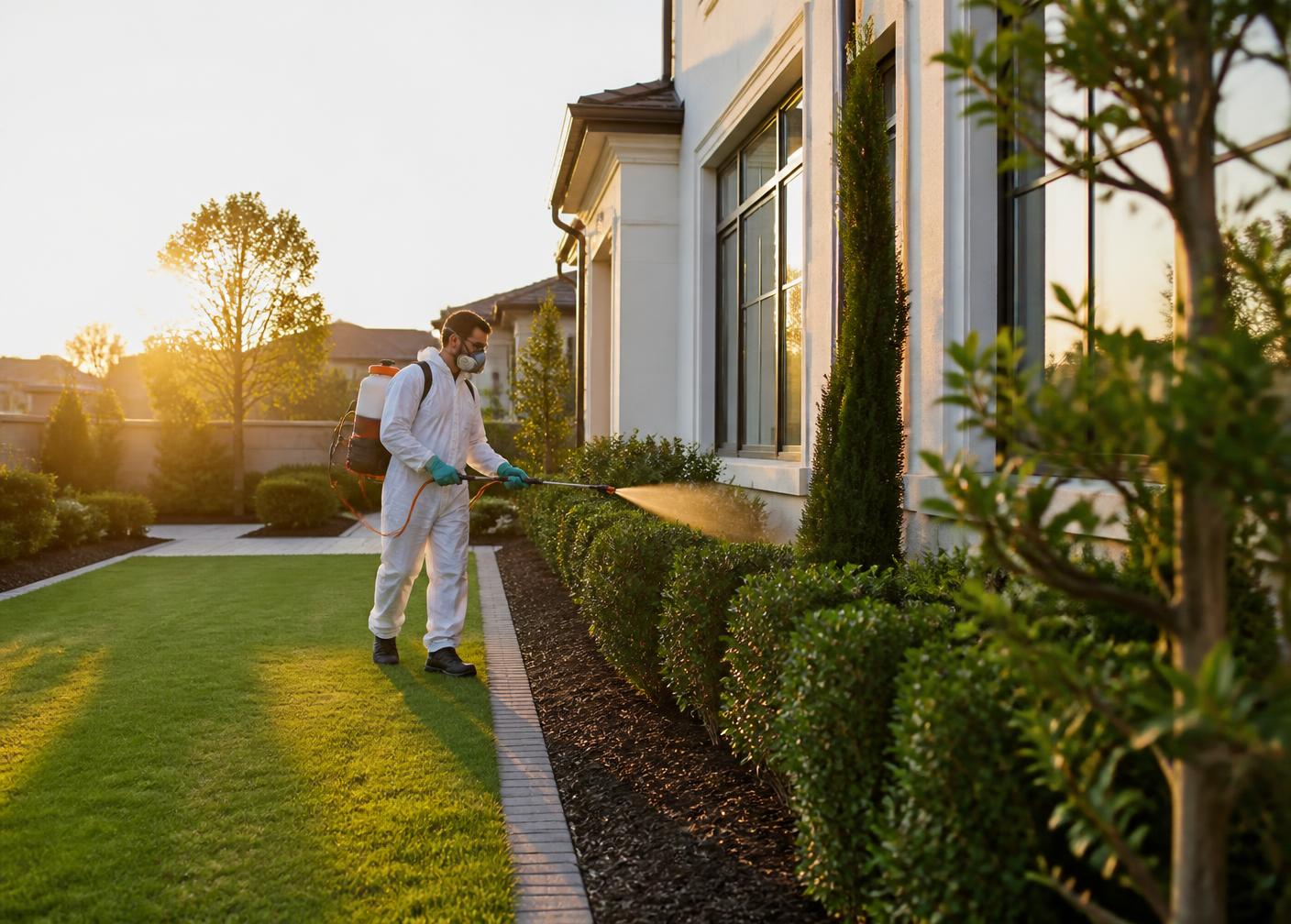
- Trenching Garden and Soft Soil Areas: In garden beds, lawns, and bare soil adjacent to external brickwork, technicians excavate a trench down to the top of the concrete footing. Termidor is applied to trenched soil or injected under pressure through slab drill holes and reticulation lines in strict accordance with APVMA-approved label rates and foundation depth requirements, then backfilled in layers to create a continuous chemical barrier.
- Drilling Concrete Paths, Patios, and Pavers: Where concrete slabs, tiled walkways, or pavers abut external walls, trenching is impossible without major structural removal. In these sections, small holes are precision-drilled through the hard surface at regular intervals (typically 150 mm to 200 mm apart) along the perimeter. The termiticide is injected under pressure into the soil beneath the slab, and the drill holes are neatly sealed with colour-matched plugs or mortar.
- Managing Sub-Slab and Wall Cavities: In double-brick construction, termites frequently travel through the sub-floor or cavity weep holes. Where necessary, treatment is introduced into foundation voids to prevent subterranean bridging.
Perth's sandy soils on the Swan Coastal Plain drain rapidly. Achieving an effective chemical barrier requires accurate trench preparation, correct volume delivery, and thorough site assessment to account for roots, drainage pipes, and soil variations.
How Termidor Works
Termidor (active ingredient: fipronil) is a leading APVMA-registered non-repellent termiticide extensively utilised across Western Australia for both active colony management and preventative soil barriers.
Repellent vs Non-Repellent Chemistry
Older termiticides often relied on repellent synthetic pyrethroids. While repellent chemicals create a toxic zone that termites can sense and avoid, any small gap in the barrier—caused by tree roots, utility installations, or soil movement—gives termites an opportunity to bypass the treatment and enter the building.
Subterranean termites cannot see, smell, or taste treated soil, continuing normal foraging through the zone.
Particles adhere to the termite cuticle and transfer across colony members via contact and mutual grooming.
This horizontal transfer helps reduce termite numbers throughout the workings.
Termite Reticulation Refills (Altis, TermX & Camilleri)
Arranging a professional termite reticulation refill in Perth is an efficient way to recharge your property's sub-surface defences without invasive excavation. A termite reticulation system is an underground network of perforated piping installed around the external foundation perimeter of a building during construction or renovation. The system allows termiticide to be distributed into the perimeter soil via external injection points.
Fix4U services all three major reticulation system brands used in Western Australia:
- Altis Reticulation
- TermX Reticulation
- Camilleri Underslab Systems
How a Reticulation System Is Recharged
Refilling a reticulation system avoids having to drill through decorative paving or dig up established garden beds. Technicians connect a specialised pump and injection manifold to the system’s external junction boxes. The termiticide is pumped through the lines under calibrated pressure, distributing the chemical evenly into the soil around the footings.
System Suitability and Pre-Refill Checks
A reticulation system cannot simply be assumed to work without testing. Over time, underground pipes can become blocked with sediment, crushed by heavy paving, or pierced by invasive tree roots.
Before refilling an existing system, Fix4U tests the lines for pressure integrity and flow consistency. If a system has lapsed without maintenance for several years, we strongly recommend a comprehensive termite inspection under AS 3660.2 before refilling to ensure that termites have not already exploited an expired zone and entered the roof or wall frames.
How Much Does Termite Treatment Cost in Perth?
| Service Scope | Typical Perth Market Guide | Fix4U Starting Rate |
|---|---|---|
| Targeted Active Termite Treatment | $600 – $1,200 | FROM $800 incl. GST |
| Termite Reticulation System Refill | $800 – $1,600 | FROM $800 incl. GST |
| Complete Chemical Barrier (Small Home) | $1,500 – $2,400 | Custom Quote ($800+) |
| Complete Chemical Barrier (Large Home) | $2,200 – $3,800+ | Custom Quote ($800+) |
| Visual & Thermal Termite Inspection | $220 – $350 | FROM $200 incl. GST |
*Note: The broader market ranges above represent a general guide for the Perth metropolitan area. Fix4U treatments are priced transparently based on measured linear metres and site conditions.
For a full breakdown of general pest control pricing across residential and commercial properties, consult our comprehensive Perth pest control pricing and cost guide.
What Affects the Cost of a Termite Barrier?
When quoting a termite barrier, technicians evaluate several practical factors that determine the time, labour, and chemical volume required:
| Cost Factor | Why It Affects the Total Price |
|---|---|
| Perimeter Linear Metres | Chemical barriers are calculated by running metres around the external walls. A 50-metre perimeter requires substantially less termiticide than an 85-metre perimeter. |
| Ground Surfaces | Soft garden beds require standard hand trenching and backfilling. In contrast, concrete paths, exposed aggregate, tiled verandas, and paved patios require precision rotary drilling, sub-slab injection, and sealing with matching plugs. |
| Property Access & Obstacles | Built-in air conditioning units, hot water systems, outdoor decking, storage sheds, and boundary retaining walls can restrict access to external footings, requiring specialised treatment methods. |
| Existing Reticulation | If your property has a functional Altis, TermX, or Camilleri reticulation system, recharging it requires less physical labour than excavating a new soil trench from scratch. |
| Active Termite Staging | If active termites are currently feeding inside the home, an initial active knockdown treatment is required prior to or alongside installing the perimeter soil barrier. |
Termite Risk in Perth Homes
Western Australia experiences significant subterranean termite activity. The predominant species causing economic damage across the Perth metropolitan area is Coptotermes acinaciformis, alongside Schedorhinotermes reticulatus.
Subterranean termites build underground nests and travel through subterranean tunnels in search of cellulose (timber). Because they desiccate rapidly when exposed to dry air and sunlight, they construct protective earthen mud leads over non-edible materials such as brick, concrete, and metal to access wood.
Common Concealed Entry Points
Double-Brick Homes and Concrete Slabs: A Common Misconception
A common assumption among Perth homeowners is that double-brick construction built on a concrete slab is immune to termite attack.
While it is true that termites cannot eat concrete footings or clay bricks, they readily navigate these materials to reach the timber components of the home. In a typical Perth double-brick residence, structural elements vulnerable to termite damage include:
- Structural pine or hardwood roof trusses and ceiling joists
- Door frames, window liners, and architraves
- Internal timber baseboards and skirting boards
- Built-in cabinetry, flooring underlays, and partition stud walls
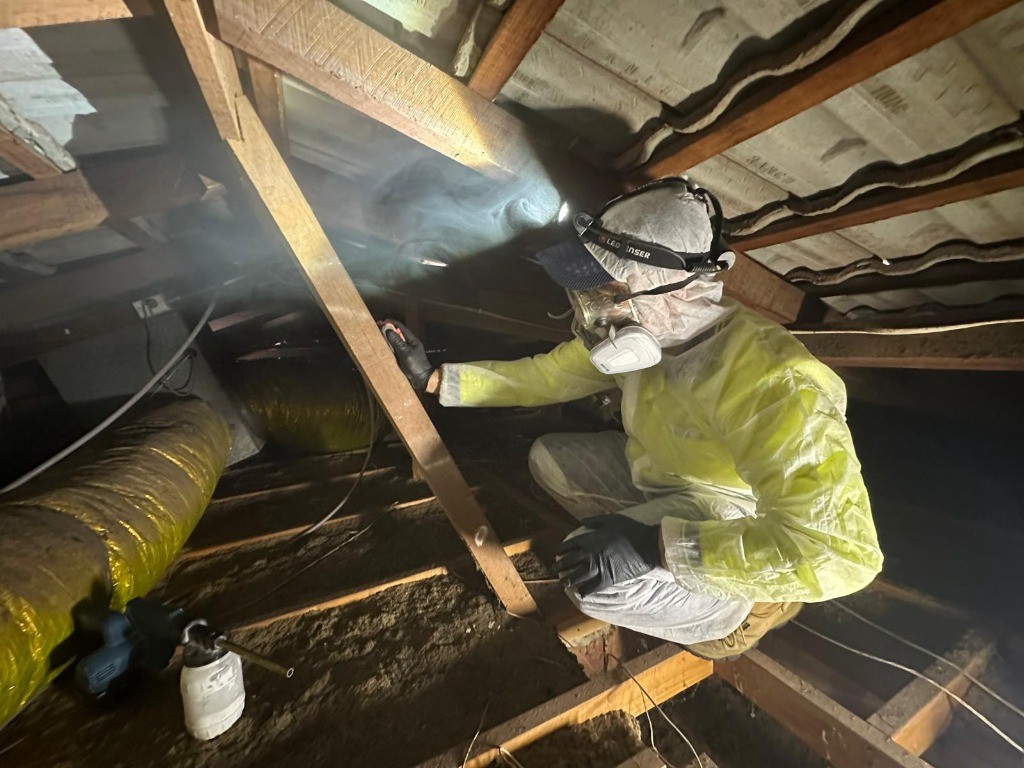
Termites can travel unseen through the internal cavity of a double-brick wall, enter via shrinkage cracks in concrete slabs, or move around pipe penetrations. Once inside the cavity, they can reach roof timbers without showing visible warning signs inside living areas until significant timber hollowed-out damage has already occurred.
Trust, Safety & Professional Standards
Termite management involves applying specialised chemical formulations around your home. Professional application, regulatory adherence, and transparent communication ensure the safety of your household and the effectiveness of the treatment.
Our 90-Day Termite Treatment Warranty
Fix4U stands behind the quality of its workmanship and chemical application. We provide a 90-day termite treatment warranty on our active termite treatments and chemical barrier installations.
• If live termite activity occurs within the specific treated zones during the 90-day warranty period, Fix4U will return to reinspect and carry out any necessary re-treatment of those areas.
• The 90-day warranty represents Fix4U's initial post-treatment workmanship assurance. It is distinct from the underlying termiticide manufacturer’s expected chemical longevity.
• While Termidor's chemical active can remain bound to undisturbed soil particles for multiple years under suitable conditions, Fix4U backs its specific application and workmanship with a 90-day termite treatment warranty. Environmental factors, soil conditions and subsequent landscaping or paving work can affect treated areas, so regular termite inspections remain important for ongoing protection.
• To ensure continuing protection beyond the initial warranty period, Australian Standard AS 3660.2 recommends an annual timber pest inspection for all Perth residential properties.
What to Expect During Your Treatment
Understanding what happens on treatment day helps you prepare your property and family:
Technicians assess foundation access, soil lines, paving surfaces, and any active workings.
Linear metres are measured to calculate the precise chemical volume required under AS 3660.2.
Soft soil is trenched down to foundation footings; paved areas are marked for precision drilling.
Termidor is applied to trenched soil or injected under pressure through slab drill holes and reticulation lines in strict accordance with APVMA-approved label rates and foundation depth requirements.
Trenches are backfilled; drill holes in concrete or pavers are sealed with matching plugs.
Technician issues a treatment certificate, meter box durable notice, and safety instructions.
Safety for Children, Pets & Family
Customer safety is our priority during every termite treatment. Modern termiticides such as Termidor bond strongly with organic soil matter once applied, resulting in low soil mobility and minimal volatile odour.
However, during active application and while the chemical is being introduced into soil or injection points, safety precautions must be maintained:
Keep children and domestic pets away from the immediate treatment zone while work is underway. Products are applied per approved label directions; follow Fix4U's property-specific safety advice.
Once chemical treatments have soaked into the soil and concrete injection points have been sealed, the area can be returned to normal use. Your technician will provide exact re-entry instructions.
Move pet food bowls, water bowls, and bedding away from the external foundation perimeter prior to our arrival. Notify technicians of fish ponds or outdoor birds during the initial walkthrough.
Exploring Related Pest Services
Managing your property against pests often involves multiple service areas. Explore our related services across the Perth metropolitan region:
Frequently Asked Questions About Termite Treatment in Perth
Clear, direct answers to common questions about termite eradication, chemical barriers, and reticulation.
Fix4U termite treatments and chemical barriers start from $800 including GST. The total cost for a complete perimeter barrier depends on property size, total linear metres, and whether the perimeter requires soft soil trenching or rotary concrete drilling. Targeted active termite foaming and reticulation refills also start from $800. For an accurate quote, call our technicians on 0481 296 638.
Protect Your Perth Property from Termites Today
Subterranean termites pose a genuine risk to Western Australian timber structures. Delaying treatment once termites or high-risk conditions are present can lead to costly structural damage.
Fix4U Pest Control And Termite Treatment Perth • Mobile dispatch across all Perth suburbs from our Gosnells depot.