
Spider Control Perth: Targeted Spider Removal & De-Webbing Treatments
Targeted Spider Management for Perth Homes & Outdoor Spaces — From $180 inc GST
Spiders are a familiar part of the Western Australian environment, but when they establish heavy webs across your eaves, take over outdoor entertaining areas, or wander into bedrooms, professional intervention provides welcome relief. From venomous Redback spiders nesting in patio furniture and weep holes to dense Black House spider webs gathering dust along window frames, Fix4U Pest Control And Termite Treatment Perth delivers structured, targeted spider treatments across Greater Perth.
Operating from our depot at 120 Dowitcher Loop, Gosnells WA 6110, we provide targeted spider control tailored to your property layout, pest species, and safety considerations. Spider treatments start from $180 inc GST. Final pricing depends on property size, treatment areas, access, level of spider activity, treatment requirements, and site conditions.
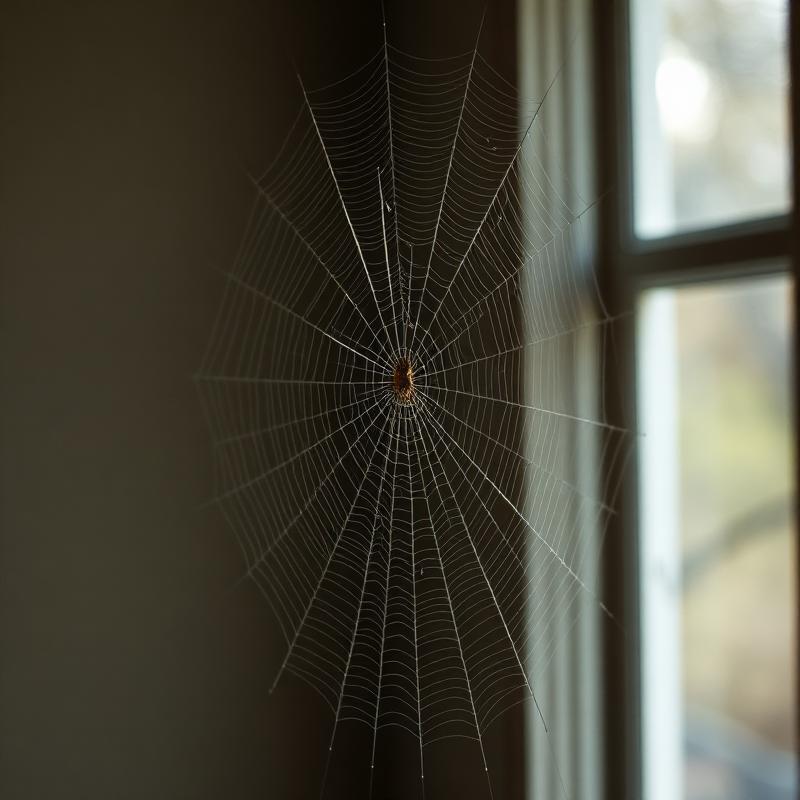
Professional spider management combines thorough property inspection, species identification, mechanical de-webbing where appropriate, and targeted perimeter treatments around eaves, windows, and boundary fences.
Spider Control for Perth Homes
Perth’s warm, Mediterranean climate allows spiders to remain active for much of the year, with populations swelling rapidly through spring and summer. While spiders play a beneficial ecological role by feeding on garden insects, their presence around residential structures frequently creates genuine safety and maintenance challenges:
Household Safety Concerns
Venomous species such as Redback spiders construct untidy webs in low-lying, sheltered spots—including children’s outdoor play sets, sandpits, patio furniture, and barbecue covers—posing bite risks to curious children and inquisitive pets.
Aesthetic Fouling & Cobwebs
Web-weaving species quickly coat window screens, downpipes, eaves, and alfresco ceilings with messy webs that trap windblown dust, leaves, and insect carcasses, diminishing the exterior presentation of your home.
Indoor Ingress & Alarm
Fast-moving wandering spiders, such as Huntsman and White-tailed spiders, frequently enter indoor living spaces during heatwaves or seasonal changes, seeking cool shelter behind curtains, under laundry piles, or inside wardrobes.
Fix4U focuses on targeted, responsible spider management. Rather than blanket spraying non-target areas, our treatments focus precisely where spiders nest, travel, and hunt, delivering effective population reduction while respecting household living routines.
Why Spiders Appear Around Perth Properties
Understanding why spiders congregate around suburban homes helps property owners maintain better long-term results. Spiders primarily establish themselves where three conditions meet: shelter, moisture, and an abundance of insect food.
Abundant Flying Insects
Exterior lighting around alfresco areas, security floodlights, and front entries attract moths, midges, and flies after dusk. Spiders instinctively position their webs adjacent to these light sources to capitalise on the nightly feeding opportunity.
Warm, Protected Harbourage
Perth building styles often feature sheltered structural elements—such as corrugated Colorbond fence rails, deep eave overhangs, brick weep holes, and timber pergolas—that shield spiders from wind, direct sun, and heavy rain.
Seasonal Weather Shifts
Prolonged periods of intense summer heat (exceeding 38°C to 40°C) drive hunting spiders indoors or deeper into shaded wall cavities and roof spaces in search of cooler ambient temperatures. Conversely, early autumn rains prompt ground-dwelling species to seek dry ground.
Common Spider Species Relevant to Perth
Western Australia is home to numerous spider species. Effective management begins with accurate identification, as habits, web structures, and potential risks vary significantly:
Redback Spider (Latrodectus hasselti)
Venomous / High CareAppearance & Habits: Females feature a pea-sized spherical black or dark brown body (approximately 1 cm) with an iconic longitudinal red or orange stripe on the upper abdomen. They spin messy, tangled, non-sticky support webs with sticky vertical ground lines.
Where Found: Dry, undisturbed, sheltered micro-habitats: under patio chairs, within brick weep holes, around water meter boxes, behind garden sheds, under plant pot rims, and around children's play equipment.
Risk & First Aid: Medically significant venom capable of causing severe localized pain, sweating, nausea, and muscular discomfort. According to Healthy WA, first aid involves washing the bite area, applying a cold pack to ease pain, and seeking prompt medical evaluation. Do not apply a pressure immobilisation bandage, as pressure increases localized pain.
Black House Spider (Badumna insignis)
Aesthetic NuisanceAppearance & Habits: Robust, dark brown to velvet-black spiders (12 to 18 mm) that spin dense, messy, funnel-like webs radiating from a central retreat tube.
Where Found: Corners of exterior window frames, gutter fascias, eaves, brick crevices, and around outdoor wall lamps.
Impact: While bites are painful with localized swelling, their primary impact is aesthetic: they leave unsightly webs and persistent dark faecal spotting on window sills and painted surfaces that can be difficult to clean away.
White-tailed Spider (Lampona cylindrata / Lampona murina)
Vagrant HunterAppearance & Habits: Slender, dark greyish-black cylindrical body (12 to 18 mm) with banded legs and a dull white spot at the rear tip of the abdomen. They are active nocturnal wanderers that do not spin webs, hunting other spiders (primarily Black House spiders).
Where Found: Indoors within cool fabric folds, dropped clothing, laundry hampers, bed linen, and behind curtains; outdoors under tree bark and mulch.
Medical Reality: Authoritative clinical research (including studies published in the Medical Journal of Australia) has demonstrated that white-tailed spider bites do not cause necrotic ulcers or flesh-eating skin conditions. Bites typically result in localized burning, redness, and minor swelling, similar to a bee sting. Washing the bite and applying an ice pack is the standard first-aid response.
Huntsman Spiders (Sparassidae family)
Low Toxicity / High AlarmAppearance & Habits: Large, flat-bodied spiders with a wide leg span (up to 15 cm), brown-to-grey mottling, and a distinctive sideways running gait. They are non-webbing ambush predators.
Where Found: Naturally sheltered behind loose tree bark; they frequently enter homes and garages before summer storms, often resting visibly on interior cornices or walls.
Risk: Despite their alarming size and speed, Huntsman spiders possess low toxicity and are non-aggressive, rarely biting unless roughly handled.
Wolf Spiders (Lycosidae) & Garden Orb-Weavers (Hortophora)
Garden & Ground DwellersWolf Spiders: Agile, ground-dwelling hunters with grey-brown camouflage that roam garden mulch, garden beds, and lawns at night. They construct ground burrows rather than aerial webs and occasionally fall into backyard swimming pools.
Garden Orb-Weavers: Stout-bodied spiders with large rounded abdomens that spin large, wheel-shaped aerial webs between trees, shrubs, and across garden walkways at dusk. While their webs can be inconvenient across footpaths, orb-weavers are harmless and dismantle their webs at daybreak.
Signs of Spider Activity Around Your Property
Homeowners typically recognize spider infestations through direct observation and distinctive environmental signs:
Common Spider Harbourage Areas
A successful treatment requires methodical attention to the specific physical zones where spiders shelter and reproduce:
| Zone | Typical Harbourage Features | Common Target Species |
|---|---|---|
| Rooflines & Eaves | Fascias, timber rafters, soffit junctions, gutter undersides | Black House spiders, Garden Orb-weavers |
| Window & Door Joinery | Window screen frames, sill gaps, sliding door tracks | Black House spiders |
| Brickwork & Foundation | External weep holes, mortar joints, foundation perimeters | Redback spiders, hunting White-tails |
| Boundary Fencing | Folded top rails of Colorbond sheets, post corners, gate latches | Redback spiders, Black House spiders |
| Alfresco & Entertaining | Undersides of tables, wicker chairs, barbecue covers, decking | Redback spiders |
| Roof Voids & Cavities | Ceiling joists, top-plate wall cavities, insulation edges | Wandering hunters, occasional webbers |
| Gardens & Sheds | Stored pots, timber piles, garden shed interiors, tool racks | Redback spiders, Wolf spiders |
Professional Spider Treatment Process
At Fix4U, our spider pest control approach is systematic, thorough, and tailored to the architectural characteristics of each Perth property:
Initial Site Assessment
The technician inspects the property exterior, identifies active species, evaluates harbourage intensity, notes non-target sensitivities (such as domestic pets, fish ponds, or children's toys), and determines appropriate application areas.
Mechanical De-Webbing (Where Appropriate)
Where accessible, the technician physically brushes down and removes visible cobwebs, egg sacs, and organic debris from eaves, gutters, and window perimeters. Removing old webbing ensures that newly arriving spiders cannot simply inhabit existing structures and enhances the overall visual finish.
Targeted Perimeter Barrier Application
Technicians apply an approved residual surface treatment to key external harbourages, including eaves, window surrounds, door frames, downpipe junctions, patio structures, foundation masonry, and Colorbond fence rails.
Void & Cavity Treatment (Based on Site Conditions)
Where ceiling spaces or wall cavities exhibit heavy activity, dry insecticidal dust may be applied to undisturbed void areas using specialized application equipment to deter spiders sheltering inside structural recesses.
Post-Treatment Review & Practical Advice
The technician walks you through the work completed, confirms safety guidelines, and highlights practical habitat modifications to keep future activity low.
Indoor vs Outdoor Spider Treatment
Effective spider management balances external prevention with selective internal protection:
Exterior Treatment (Core Focus)
Because the vast majority of spiders breed and hunt outdoors, thorough external treatment represents the foundation of control. Establishing a residual barrier around perimeter walls, eaves, window reveals, and fencing intercepts spiders before they can enter the home or spin unsightly webs over entertaining spaces.
Interior Treatment (Targeted & Selective)
Internal treatments are generally reserved for properties experiencing active indoor sightings. Internal work focuses conservatively on skirting board perimeters, behind large appliances, under heavy storage furniture, and inside accessible roof voids. Internal sprays are applied with precision to minimize occupant disruption.
Looking for whole-property protection? If your property is also experiencing general crawling insects—such as cockroaches or ants—explore our comprehensive general pest control Perth service, which bundles protection against multiple common household pests for $275 inc GST.
Mechanical De-Webbing: An Essential Step
Applying liquid sprays directly over dirty, dust-covered spider webs is an ineffective shortcut. Old webs act as physical umbrellas, deflecting residual spray away from the surfaces where spiders actually walk, while dead webs remain unsightly and trap airborne dust.
Where appropriate and safely accessible, Fix4U incorporates mechanical de-webbing using specialized extension brushes as part of the service. By physically removing accessible cobwebs and egg sacs from eaves, gutters, window frames, and pergola beams before or during treatment:
- Old egg sacs are physically eliminated, reducing the next generation of spiderlings.
- The treated surface receives cleaner, more direct residual contact.
- Your home’s external entertaining areas look immediately cleaner, brighter, and more inviting.
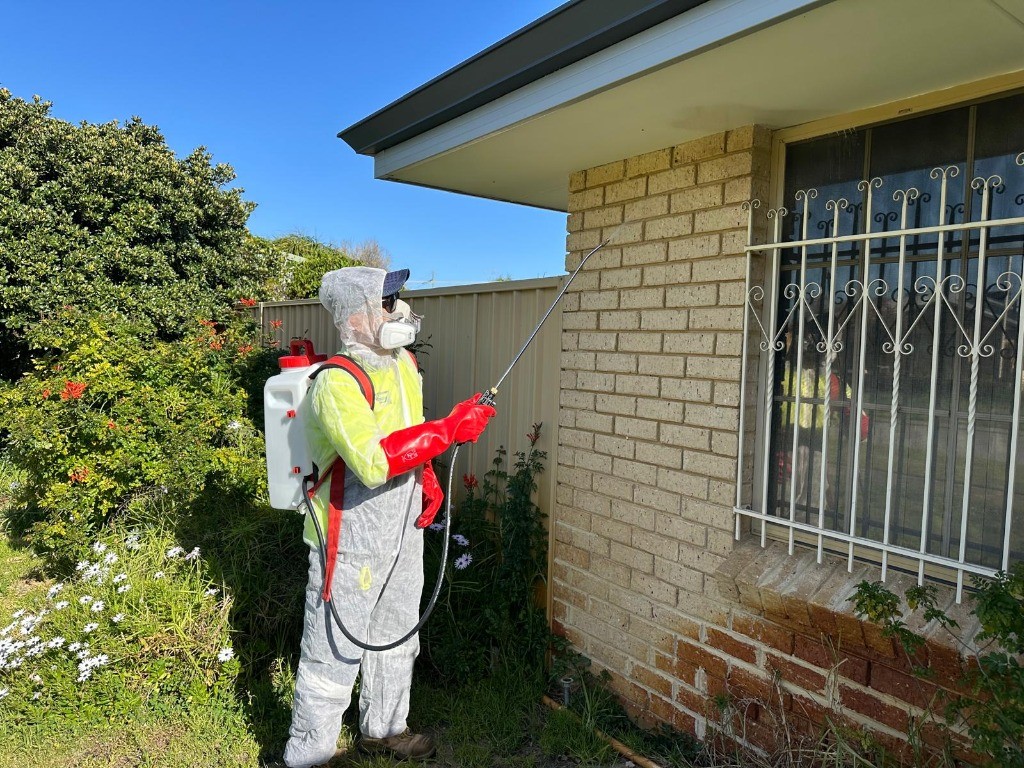
Targeted perimeter spraying along external window reveals, eaves, and Colorbond fences establishes a clean, residual barrier against new webbing.
Safety and Re-Entry Guidelines
Customer safety and responsible product handling are our primary priorities. All professional treatments are carried out in strict accordance with Australian standards and registered product labels:
Follow the product label and technician instructions. Re-entry depends on the treatment used and site conditions; treated areas should be allowed to dry as directed before occupants and pets return. Under typical Perth weather conditions, external surface treatments generally dry within one to two hours.
How to Prepare for Treatment
Taking a few simple preparation steps helps your technician deliver the most effective treatment possible:
Move outdoor furniture, children’s toys, and garden tools slightly away from external walls to allow unobstructed perimeter access.
Keep dogs and cats safely indoors or off-site during the application until all treated outdoor surfaces have fully dried. Remove pet food and water bowls.
Ensure all external windows and doors are firmly closed prior to the technician beginning external spray applications.
Place clean tarpaulins or covers over backyard ornamental ponds or fish tanks, as treatments are harmful to aquatic life.
Spider Control Pricing in Perth
At Fix4U, we believe in straightforward, competitive pricing without hidden fees. Spider control costs vary depending on the scope of the property and the severity of the infestation:
| Treatment Scope | Starting Price Anchor | What the Service May Include |
|---|---|---|
| Targeted External Spider Treatment | From $180 inc GST | External perimeter spray, accessible eave & window treatment, Colorbond fence lines, outdoor patio areas, and accessible de-webbing. |
| Internal & External Spider Service | Quoted upon inspection | Full external perimeter barrier, accessible de-webbing, targeted internal skirting treatment, and ceiling void dusting where appropriate. |
| All-in-One Pest Combo (Spiders, Ants, Cockroaches) | $275 inc GST | Complete preventative bundle covering spiders, cockroaches, and ants across internal and external zones. |
Factors That Influence Your Final Quote:
- Property Size: Multi-storey or expansive semi-rural properties.
- Fence Meterage: Extended Colorbond boundary fences and outbuildings.
- Access & Height: High raked ceilings, multi-level eaves, or steep terrain.
- Activity Level: Heavy Redback colonies requiring intensive de-webbing.
Compare rates across all service types in our transparent Perth pest control cost guide.
What to Expect After Treatment
Understanding the post-treatment timeline sets clear, realistic expectations:
Immediate Knockdown & Flushing
You may observe an initial increase in spider activity over the first 24 to 48 hours as sheltering spiders are flushed out of cracks, crevices, and weep holes by the treatment.
Progressive Activity Decline
As wandering spiders contact treated surfaces, active populations decline noticeably over the following one to two weeks.
Residual Deterrence on Sheltered Surfaces
Professional residual applications remain active on sheltered surfaces for an extended period, helping deter newly arriving spiders from establishing webs. External surfaces exposed to intense sun or rain degrade faster than covered patio areas.
Wandering Bushland Species
Wind-blown spiderlings or wandering Huntsman spiders from neighbouring gardens may occasionally appear on outdoor paths, but contact with treated barriers prevents them from establishing permanent nests.
Preventing Spider Activity
Ongoing environmental management works hand-in-hand with professional treatments to keep your property comfortable:
Adjust Outdoor Lighting
Switching white floodlights to warm yellow LEDs reduces flying moths and midges, removing the nightly food supply that attracts spiders.
Trim Garden Foliage
Cut back shrubbery and tree branches at least one metre away from external walls and gutters to eliminate direct access bridges.
Seal Weep Holes & Gaps
Install fine stainless-steel mesh weep hole covers to block spiders from entering cavity double-brick walls while preserving ventilation.
Store Gear Thoughtfully
Store gardening boots, gloves, and sports equipment in sealed plastic containers rather than loose on patio floors.
Routine Cobweb Sweeping
Regularly sweep down fresh individual webs around windows between annual professional treatments to discourage early colonization.
Reduce Clutter
Keep garden sheds, garage corners, and outdoor storage areas organized to minimize dark, undisturbed nesting voids.
Tailored protection for homes across metropolitan Perth, including Gosnells, Canning Vale, and Armadale. Also consider our certified termite inspection Perth and termite treatment barriers if timber pest protection is needed.
Maintaining clean, web-free outdoor dining settings for cafes and restaurants, managing storage shed harbourage in commercial warehouses and distribution hubs, and providing compliant documentation supporting workplace health and safety standards.
Greater Perth Service Areas
Fix4U proudly services residential and commercial clients across the entire Perth metropolitan area, including:
Gosnells, Thornlie, Maddington, Huntingdale, Kenwick, Beckenham, Langford, Southern River, Canning Vale.
Armadale, Kelmscott, Seville Grove, Roleystone, Byford, Mount Nasura.
Cockburn, Fremantle, Melville, Victoria Park, South Perth.
Stirling, Joondalup, Midland, Kalamunda, and surrounding districts.
Frequently Asked Questions About Spider Control in Perth
Find clear, straightforward answers to common questions about professional spider treatments:
Professional residential spider control in Perth starts from $180 inc GST for targeted external treatments on standard single-storey homes. Final pricing depends on property size, the number of fence lines, accessibility, and whether internal treatments or roof void dusting are required. Multi-pest packages covering spiders, cockroaches, and ants start from $275 inc GST.
Book Your Perth Spider Treatment Today
Don't let cobwebs and venomous spiders take over your home and outdoor entertaining spaces. Contact Fix4U Pest Control And Termite Treatment Perth for targeted spider treatments delivered by a Department of Health registered business (WA Health Reg. 2896).