Professional Termite Inspection Perth: Comprehensive Timber Pest Checks From $200
Fix4U Pest Control provides thorough, non-invasive visual termite inspections across the Greater Perth metropolitan area starting from $200 including GST. Operating from our base in Gosnells, our inspections examine accessible interior living spaces, roof voids, subfloors, building perimeters, and surrounding grounds within the property boundary to identify visible evidence of active termites, past timber pest damage, and conditions that place your home at risk.
An inspection is an investigative, diagnostic assessment—no chemicals are applied during the visit. You receive a clear, plain-English summary of what was examined, what could not be safely reached, and practical guidance on keeping your property protected.
What Is a Termite Inspection (and What It Is Not)?
A professional termite inspection is a detailed, non-invasive visual examination of accessible structural timbers and property grounds to detect evidence of active subterranean termites, timber pests, and conducive risk factors. It is not a chemical treatment, and no sprays or soil barriers are applied during the check.
In Western Australia, termite inspections are commonly referred to as timber pest inspections or white ant inspections. While everyday conversations often focus solely on white ants, a professional timber pest check also looks for broader timber concerns such as wood decay fungi (rot) and wood-boring insects where visible.
The primary purpose of an inspection is diagnostic clarity. Rather than making assumptions about what is happening inside structural timbers, an inspector systematically works through accessible areas of the property to establish whether termites are currently active, whether past workings exist, or whether moisture and construction defects are creating high-risk points of entry.
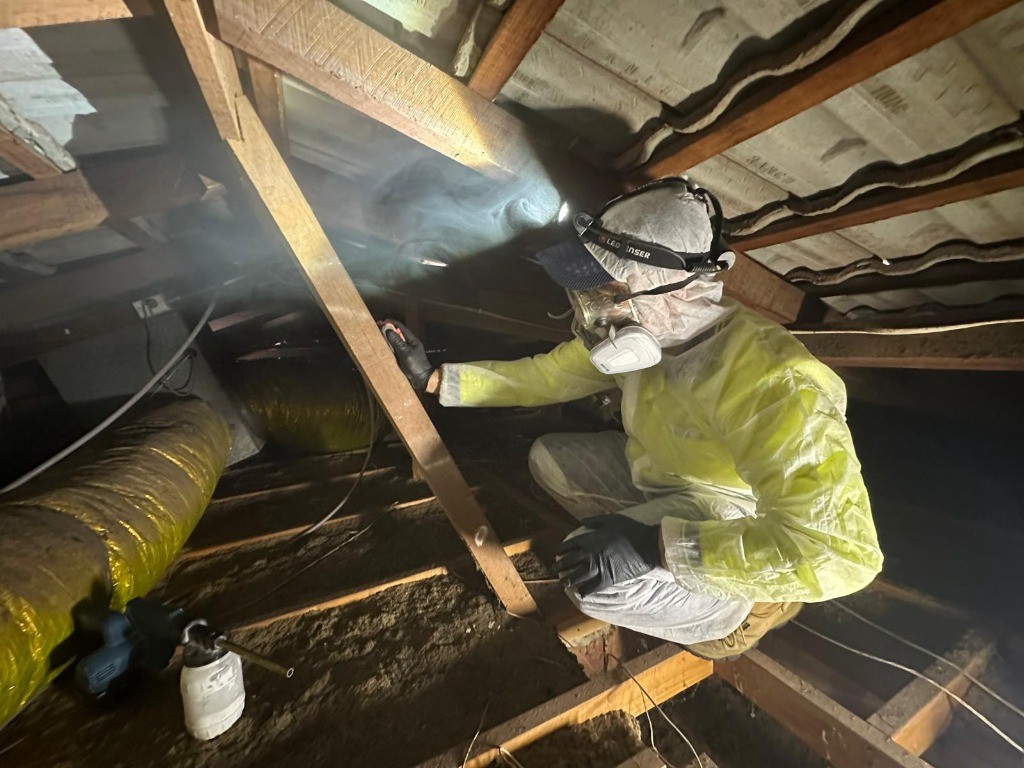
Visual roof void inspection checking framing timbers, top plates, and moisture points.
Understanding Australian Standards in Practical Terms
Professional inspections in Western Australia refer to two primary Australian Standards to ensure a methodical process and clear reporting boundaries:
- AS 3660.2 (Termite Management in Existing Buildings): Provides the benchmark methodology for inspecting, assessing termite risk, and managing ongoing termite prevention in established homes.
- AS 4349.3 (Timber Pest Inspections): Governs the reporting and scope requirements for timber pest inspections, detailing what inspectors examine, how findings are documented, and how physical limitations must be reported.
These standards ensure that an inspection is structured, consistent, and transparent about what was checked and what was physically inaccessible on the day.
The 4 Inspection Zones Checked on a Perth Property
Subterranean termites do not confine themselves to one corner of a home. An effective inspection follows a disciplined sequence through four primary inspection zones:

The four primary inspection zones assessed during a Perth timber pest inspection.
Skirtings, Trims, Frames & Cabinetry
Every accessible room is visually examined with close attention to timber elements in direct contact with masonry or walls. This includes skirting boards, door frames, window reveals, architraves, and built-in cupboards. Sounding techniques (gentle acoustic tapping) are used on accessible timbers to check for internal hollows or weakened timber cores. Wet areas—bathrooms, laundries, and kitchens—receive focused attention, as hidden plumbing leaks and high moisture create prime entry targets for foraging termites.
Trusses, Rafters & Top Plates
Where safe crawl access exists, the ceiling void is inspected for framing timber integrity. The inspector checks visible ceiling joists, rafters, roof battens, purlins, and wall top plates. Because roof spaces are dark, undisturbed, and rarely accessed by homeowners, subterranean termites can construct extensive mud leads and cause structural damage behind ceiling linings long before surface symptoms appear below.
Slab Edges, Weep Holes & Crawlspaces
On concrete slab properties, the external slab perimeter is inspected for exposed slab edges, weep holes, external expansion joints, and foundation cracks. On older properties with suspended timber floors, accessible subfloor crawlspaces are inspected to examine timber bearers, joists, masonry piers, and ant caps. External soil levels, garden beds, and paving abutting the perimeter walls are assessed to check if physical inspection zones have been buried or bridged.
Fences, Retaining Walls & Outbuildings
The exterior grounds within the property boundary are examined for visible evidence of active termite foraging, external mud tubes, and conducive timber materials. This includes boundary timber fences, landscaping retaining walls, timber garden edging, dead tree stumps, stored firewood, pergolas, and detached sheds or outbuildings.
The Honest Limits of a Visual Inspection
Understanding what a visual inspection cannot tell you is just as critical as understanding what it covers. This transparency is fundamental to professional timber pest management.
An inspector examines only those areas that are readily accessible, visually clear, and safe to enter at the time of the walk-through. Technicians do not cut into wall linings, remove fixed floor coverings, or dismantle building components.
No legitimate pest management technician can promise detection of termites inside sealed or obstructed building elements during a visual assessment. The following conditions represent common physical limitations encountered during Perth inspections:
- Concealed Wall Cavities: Inspectors cannot see inside wall cavities lined with plasterboard, internal brick cavities, or wall framing concealed behind heavy furniture, wall hangings, or fixed cabinetry.
- Flooring Coverings: Subfloor timbers hidden beneath fixed carpets, tiles, laminate flooring, or tongue-and-groove boards cannot be viewed without damaging finishes.
- Insulation & Low-Pitch Roof Voids: In roof spaces, thick layers of fiberglass batts, blown cellulose insulation, air conditioning ductwork, or low-pitch eaves can prevent visual contact with underlying timbers and make crawling unsafe.
- Locked Areas & Dense Storage: Locked sheds, under-stair storage crammed with belongings, or high exterior garden walls lined with dense creepers restrict visibility.
When an area cannot be safely entered or viewed, Australian Standards require that it be formally recorded as an inspection limitation. A report showing no visible activity in accessible spaces provides valuable diagnostic information, but it is not a structural warranty or a guarantee that sealed, concealed cavities are entirely pest-free.
Why Regular Termite Inspections Matter in Perth
Perth and the wider South-West of Western Australia are recognized as areas of significant subterranean termite pressure. Our warm, Mediterranean climate—characterized by dry summers and mild, wet winters—creates favorable conditions for subterranean termite colonies to forage underground throughout the year.

Common environmental and construction conditions that increase termite vulnerability around Perth homes.
Local Subterranean Species
The vast majority of structural timber damage in Perth is caused by native subterranean termite species:
- Coptotermes acinaciformis: Widely regarded as the most destructive subterranean species in urban Western Australia. They forage through sandy soil profiles and typically nest in root crowns of living eucalypts, large dead stumps, or subterranean central nests, tunneling into structural framing timbers.
- Schedorhinotermes species: Frequently encountered in established Perth suburbs. Known for multi-nesting habits in root systems, they can excavate structural timber framing from the inside out while leaving outer paint or timber surfaces intact, concealing activity until an inspection reveals hollowed framing.
Conducive Conditions: The Early Warning System
Subterranean termites require continuous moisture to survive. Because of this biology, identifying conducive conditions is a central component of an inspection. Common risk factors identified around Perth homes include:
- Air conditioning condensation drains or hot water relief valves discharging directly against external foundation brickwork.
- Raised garden beds, turf, or paved pathways that sit above the concrete slab edge, bridging the inspection zone and covering external weep holes.
- Untreated landscape timbers, timber sleepers, or tree roots in direct contact with damp soil near the house walls.
- Leaking gutters, downpipes, or blocked subfloor vents creating humid subfloor crawlspace environments.
Correcting these moisture and bridging issues early is often the single most effective step a homeowner can take to prevent future subterranean attacks.
The Insurance Reality
Standard Australian home and building insurance policies generally exclude gradual termite and pest damage, but policy terms vary. Insurers typically classify insect activity as gradual deterioration and preventable property maintenance, which means homeowners are responsible for repair costs. Because repair costs for structural roof trusses and wall framing fall directly on the homeowner, routine visual inspections remain the primary method for catching infestations early.
When Should You Book a Termite Inspection?
Property owners typically arrange a timber pest inspection under one of three circumstances:
1. You Have Noticed Suspicious Activity or Physical Warning Signs
If you spot unexplained signs around your property, do not disturb the area or spray aerosol fly sprays, which can cause foraging termites to seal their leads and move to another part of the building. Signs warranting prompt inspection include:
- Mud tubes running up foundation walls, piers, or along baseboards.
- Skirting boards, architraves, or window frames that sound hollow when lightly tapped.
- Rippled, blistered, or cracked paintwork on timber trims that is not related to moisture leaks.
- Doors or windows that have suddenly become tight or difficult to open or latch.
- Small piles of discarded winged alate insects (swarmers) near window sills after warm, humid weather.
2. It Has Been More Than 12 Months Since Your Last Inspection
Australian Standard AS 3660.2 advises that competent termite inspections be carried out at intervals not exceeding 12 months, with more frequent monitoring recommended for properties exposed to higher risk factors. Routine annual checks ensure that chemical barrier maintenance schedules are tracked and that new environmental risk factors—such as recently laid garden mulch or paving changes—are identified before termites exploit them.
3. You Are Buying or Selling a Property
If you are purchasing a home in Perth, a pre-purchase timber pest inspection provides an independent assessment of whether active termites, past damage, or timber pests exist before contract conditions become unconditional. Ensure you check your contractual condition deadlines and notify us when booking so scheduling can be aligned with your timeframe.
Termite Inspection Cost in Perth
Professional residential termite inspections with Fix4U start from $200 including GST. The final price depends on property size, architectural layout (slab vs subfloor), and safe site accessibility.
At Fix4U Pest Control, professional termite inspections start from $200 including GST. We believe in transparent pricing, allowing homeowners to book an independent diagnostic inspection without unexpected surprise charges.
The final fee for an inspection can vary depending on practical property variables, including:
- The overall footprint and architectural layout of the dwelling (for example, larger homes with extensive extensions).
- Whether the property is constructed on a concrete slab or features an accessible suspended timber subfloor.
- The complexity and safe access profile of the roof void and surrounding grounds.
→ Compare full price breakdowns across all services: Perth pest control pricing guide
What Happens After Your Inspection?
Once the visual walk-through is complete, you receive a clear, straightforward written report outlining the findings. An inspection typically leads to one of two outcomes:
Conducive Condition Management
If accessible areas show no evidence of active subterranean termites, the report details any physical limitations encountered and highlights identified conducive conditions. You receive practical recommendations—such as clearing soil off slab edges, diverting air conditioner overflow lines, or trimming back garden beds—to help keep your home protected until your next scheduled check.
Evidence-Based Next Steps
If active subterranean termites or previous structural workings are discovered, the inspector documents the observable location, evaluates the visible extent of activity in accessible areas, and identifies potential entry pathways or conducive conditions.
Because an inspection is purely diagnostic, no treatment is started without your prior review and agreement. You will be provided with clear next steps and an obligation-free recommendation for an appropriate management plan under AS 3660.2. To understand how active infestations are treated and how long-term soil barriers work, view our dedicated guide to termite treatment and chemical barriers.
Timber Pest Inspection vs Building Inspection: Understanding the Difference
When buying a property or auditing a home, property owners often hear the phrase "building and pest inspection." It is important to understand that these are two distinct disciplines carried out under separate Australian Standards:
| Service Feature | Timber Pest Inspection (AS 4349.3) | Structural Building Inspection (AS 4349.1) |
|---|---|---|
| Primary Focus | Timber-destroying biological pests: subterranean termites, wood-boring beetles, and fungal decay (wood rot). | Structural integrity, building workmanship, cracked foundations, roof plumbing, and safety defects. |
| Governing Standard | AS 4349.3 / AS 3660.2 | AS 4349.1 |
| Professional Discipline | Licensed Pest Management Technician | Registered Builder or Qualified Building Inspector |
Fix4U Pest Control specializes strictly in pest management and timber pest inspections. We do not provide structural building inspections or architectural engineering assessments. Where property transactions require both reports, buyers typically arrange for a qualified building inspector and a licensed timber pest technician to evaluate the property.
Frequently Asked Questions About Perth Termite Inspections
At Fix4U Pest Control, residential termite inspections start from $200 including GST for a standard residential property. Final pricing depends on property size, architectural layout (concrete slab vs subfloor), and accessibility. We provide clear pricing confirmation before booking.
Book Your Perth Termite Inspection Today
Whether you need an annual AS 3660.2 timber pest check, are buying a home, or have noticed concerning signs in your skirting boards, Fix4U provides honest, diagnostic inspections starting from $200 including GST. Operating from our Gosnells hub across the Perth metropolitan area, we deliver clear, practical advice with no pressure.
Fix4U Pest Control And Termite Treatment Perth
120 Dowitcher Loop, Gosnells WA 6110
Direct Phone: 0481 296 638