Wasp & Bee Nest Removal Perth: Professional Treatment for Paper Wasps, Bee Swarms & Hives
Professional Stinging Insect Management for Perth Homes & Outdoor Spaces — From $180 inc GST*
Discovering an active wasp nest under your patio eave or watching a sudden swarm of bees settle near your front entrance can quickly turn an everyday outdoor area into an unusable hazard. Across Greater Perth, warm spring and summer weather encourages stinging insects to build nests under rooflines, along Colorbond fencing, and within structural brick cavities. When nests appear close to doorways, children's play areas, or alfresco dining spaces, professional assistance helps restore safety to your property.
Based in Gosnells (120 Dowitcher Loop, Gosnells WA 6110) and registered with the Western Australia Department of Health (WA Health Reg. 2896), Fix4U Pest Control And Termite Treatment Perth provides structured, methodical treatments for paper wasps, bee swarms, and cavity-dwelling hives throughout metropolitan Perth. Accessible single-nest paper wasp treatments start from $180 inc GST*. Final pricing is subject to service scope, structural access, and site conditions confirmed by your technician.
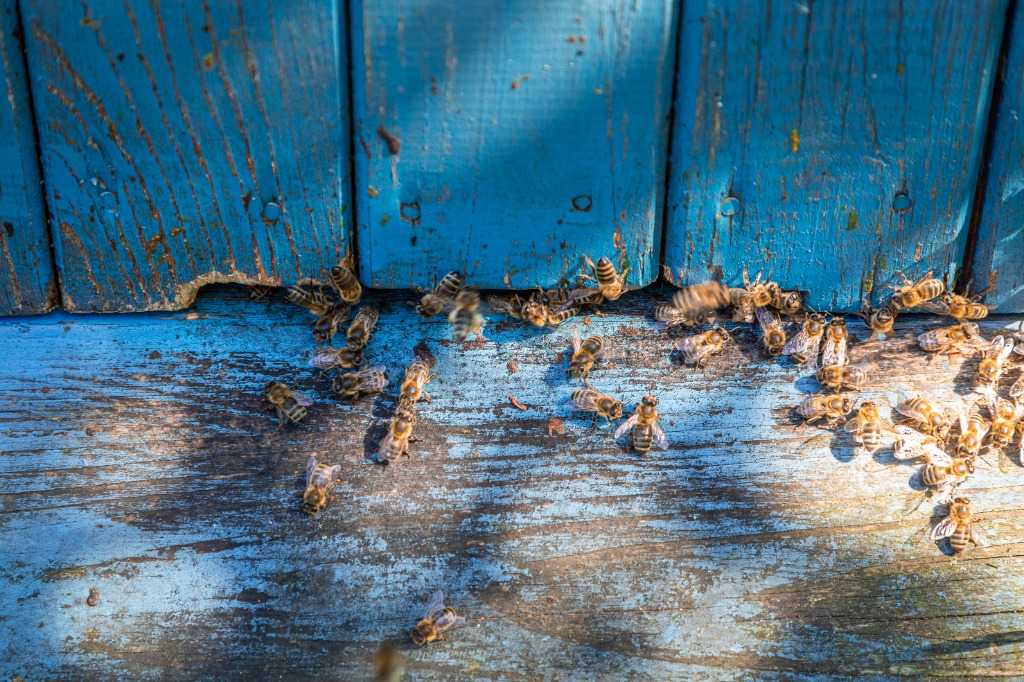
Professional stinging insect management combines accurate species identification, protective equipment, targeted APVMA-registered treatments, and eave clearance across residential and commercial properties.
Wasp & Bee Nest Removal in Perth
Perth’s prolonged sunny climate and extensive suburban gardens create ideal breeding conditions for both wasps and bees. While both insects play roles in natural pollination and garden ecology, their establishment on or inside residential structures introduces genuine physical risks:
Sting Hazards & Allergic Risks
Wasps and bees defend their colonies assertively. Stings are painful and cause intense swelling. For individuals with venom hypersensitivity, stings can trigger systemic anaphylaxis requiring immediate emergency medical care.
Restricted Outdoor Living
Patios, pergolas, swimming pool surrounds, and backyard lawns become hazardous zones when defensive insects nest nearby, preventing children and pets from enjoying outdoor spaces safely.
Structural Complications
Feral honey bees entering brick weep holes or roof gaps construct large wax combs. In Perth's extreme summer heat, abandoned combs melt, causing ceiling stains, timber rot, and secondary pest invasions.
Fix4U delivers disciplined, responsible pest management. We accurately identify the insect species involved, evaluate the structural setting, and recommend the most effective and safe treatment plan for your household.
Wasp Nest Removal and Treatment
Wasps are among the most common warm-weather callouts across suburban Perth. Understanding the specific type of wasp nesting on your property determines the appropriate management method:
1. Paper Wasps (Polistes spp.) — Perth's Common Eave & Fence Nuisance
Paper wasps—primarily the Common Paper Wasp (Polistes humilis) and the introduced European Paper Wasp (Polistes dominula)—are widespread across Western Australia. They are not declared agricultural pests, meaning their management on private land is the responsibility of the property owner.
- Nest Structure: Paper wasps build distinctive, exposed, umbrella-shaped honeycomb nests made from chewed wood fibre and saliva. The grey, papery nests feature exposed hexagonal brood cells facing downwards.
- Habits & Behaviour: They feed on caterpillars and nectar. While generally unaggressive when foraging, they defend their brood vigorously if their nest is physically disturbed or approached within one to two metres.
- Common Locations: Under roof eaves, gutter fascias, pergola beams, window reveals, shed awnings, and inside the folded top rails of Colorbond perimeter fencing.
- Professional Treatment: Technicians apply targeted, APVMA-registered contact formulations directly to the active nest structure to neutralize the colony. Once activity has ceased, accessible nests are scraped down and the anchor point cleaned to remove residual pheromones.
2. Mud-Dauber Wasps (Sceliphron spp.)
Mud-daubers are solitary wasps that construct hardened clay or mud tubes plastered against sheltered exterior walls, garage brickwork, and under eaves.
Unlike paper wasps, mud-daubers do not defend their nests in swarms and rarely sting humans. However, their hardened mud cylinders create unsightly blemishes on painted render and brick mortar. Each mud cell is packed with paralyzed spiders cached as food for developing larvae. If mud-dauber nests are an issue around your property, our technicians safely scrape down the mud casings and apply a residual surface deterrent. If spiders are also prevalent around your eaves, consider our targeted spider control Perth service.
European Wasps: A Western Australian Biosecurity Issue
A critical distinction every Perth property owner must understand is the difference between ordinary paper wasps and the European Wasp (Vespula germanica).
In Western Australia, the European wasp is an officially Declared Pest under the Biosecurity and Agriculture Management Act 2007 (BAM Act). It is considered one of the world's most damaging social insect pests, posing severe threats to WA's horticultural and viticultural industries, native biodiversity, and public outdoor safety.
The Department of Primary Industries and Regional Development (DPIRD) runs a strict surveillance, trapping, and eradication program to prevent this pest from gaining a permanent foothold in WA. Confirmed European wasp nests are located and destroyed by DPIRD or local municipal councils free of charge to protect the state.
| Diagnostic Feature | European Wasp (Declared Pest) | Paper Wasp (Common Nuisance) |
|---|---|---|
| Antennae Colour | Completely all-black from base to tip | Yellow-orange or reddish-orange tips/bands |
| Flight Posture | Legs held tightly tucked against body; swift flight | Long back legs distinctly dangle downwards |
| Nest Location | Concealed; 80%+ underground in soil holes or cavities | Exposed under eaves, fences, and pergolas |
| Nest Appearance | Enclosed multi-layered grey paper football envelope | Open umbrella-shaped comb with visible cells |
| Feeding Habits | Aggressive scavenger of fresh meat, pet food, BBQ scraps | Feeds on nectar and caterpillars; ignores meat |
| Recommended Action | Report to PaDIS on (08) 9368 3080 | Contact Fix4U for treatment |
If you observe wasps entering a hole in the ground, scavenging on pet food, or possessing all-black antennae, do not attempt to treat the nest yourself. Contact the DPIRD Pest and Disease Information Service (PaDIS) on (08) 9368 3080, email padis@dpird.wa.gov.au, or submit a report via the free MyPestGuide Reporter mobile app.
Bee Swarms, Established Hives & Structural Bee Problems
Honey bees (Apis mellifera) require a fundamentally different management approach from wasps. Bees are essential agricultural pollinators, and community preference strongly favours humane management wherever feasible. However, when bees establish themselves inside residential building structures, they present distinct safety and property maintenance challenges:
1. Spring Bee Swarms (Temporary Outdoor Clusters)
During spring (September to November), healthy colonies naturally reproduce by swarming. A queen leaves the original hive accompanied by thousands of worker bees, temporarily clustering on a tree branch, garden fence, or letterbox for 24 to 72 hours while scout bees search for a permanent nesting hollow.
Swarm Temperament: Swarming bees are generally docile. Having gorged on honey reserves before leaving the parent hive, and having no brood or comb to defend, they rarely sting unless physically provoked or crushed.
Recommended Action: Keep children and pets at a safe distance and allow the swarm to rest. In many cases, swarms depart naturally within one to two days once scouts locate a suitable hollow. Where a hanging swarm creates an immediate obstruction or safety risk, specialist bee relocation by a registered local beekeeper is often the preferred solution.
2. Established Hives in Structural Cavities
When scout bees locate an entrance into a residential structure—such as an unmeshed weep hole, an unsealed tile junction, an air conditioning pipe penetration, or a chimney—they establish a permanent colony. Within weeks, worker bees construct complex wax combs, rear brood, and store substantial volumes of honey.
- Double-Brick Wall Cavities: Common across Perth brick-and-tile homes. Bees enter through narrow mortar voids and build extensive combs between the inner and outer brick leaves.
- Roof Voids & Ceilings: Bees settle between ceiling joists, insulating batts, and rafter bays, creating large colonies directly above living areas.
- Chimneys & Flues: Unused open fireplaces provide sheltered, dark voids that bees readily colonise.
3. The Risk of Abandoned Honeycomb in Perth Ceilings
Treating a feral bee colony inside a structural cavity without addressing the physical comb can lead to serious secondary complications:
Where Bees and Wasps Commonly Build Nests in Perth
Perth's suburban architectural styles feature several recurring construction elements that provide sheltered harbourage for stinging insects:
The folded underside of Colorbond metal fence rails provides hundreds of linear metres of warm shelter for paper wasps along boundary lines.
Timber and fiber-cement eaves, downpipe brackets, and gutter corners provide overhead shelter from winter rains and intense summer sun.
Essential for slab ventilation and drainage, unprotected weep holes offer a direct path for feral bees to enter cool cavity walls.
Rafters and polycarbonate patio sheeting provide sheltered platforms directly adjacent to outdoor barbecues and dining settings.
Shifting concrete roof tiles or degraded mortar joints create gaps into ceiling cavities where feral bees build large colonies.
Reconstituted limestone retaining walls on terraced suburban blocks feature core holes and crevices where wasps and feral bees shelter.
What to Do If You Find a Wasp Nest or Bee Hive
If you discover active stinging insects on your property, taking the correct initial precautions prevents unnecessary stings and medical emergencies:
Immediate Safety Precautions
- Keep Distance: Maintain a minimum clearance of at least five metres from active paper wasp nests or bee clusters.
- Protect Pets & Family: Bring children and pets indoors. Close windows and doors on the side of the home facing the nest.
- Avoid Vibrations: Do not mow lawns, use trimmers, or slam gates directly adjacent to a fence or eave supporting an active nest.
- Leave Night Lights Off: Avoid shining bright torches directly onto a wasp nest at night, as agitated wasps fly toward light.
Critical Warnings — What NEVER To Do
- NEVER spray with water: Garden hoses will not destroy water-resistant paper wasp combs; they agitate the colony and trigger a mass stinging attack.
- NEVER attempt to burn: Applying fire to eaves or wall cavities creates an extreme structural fire risk and will not prevent stings.
- NEVER hit with a pole: Striking an occupied nest releases alarm pheromones, causing adult wasps to swarm and attack before you can retreat.
- NEVER seal active bee entrances: Sealing weep holes while bees are inside forces them to chew through interior plasterboard, invading living areas.
Wash the sting site with soap and water. For wasp stings, apply a cold pack wrapped in a cloth to reduce localized swelling and pain. For bee stings, scrape the barbed stinger away immediately using a fingernail or credit card edge without squeezing the venom sac, then apply a cold compress. If the person exhibits difficulty breathing, facial swelling, dizziness, or generalized hives, call 000 immediately.
How Our Wasp & Bee Treatment Service Works
At Fix4U, our treatment protocol is systematic, controlled, and executed in strict compliance with Western Australian safety standards:
The technician inspects the nesting location, confirms the exact insect species, checks for entry paths into living spaces, and confirms pricing.
Occupants and pets are secured indoors. The technician dons appropriate protective equipment including specialized bee suits and heavy leather gauntlets.
Using professional equipment, the technician applies an APVMA-registered formulation directly to the nest or injects insecticidal dust into cavity entry points.
Where accessible, neutralized paper wasp nests are scraped down and removed. The attachment surface is cleaned to minimize residual scent markers.
The technician outlines drying times, explains what to expect regarding returning foragers, and recommends physical proofing steps for long-term protection.
Follow the product label and technician instructions. Re-entry depends on the treatment used and site conditions; treated areas should dry as directed before pets return.
Seasonal Stinging Insect Activity Across Greater Perth
Understanding seasonal patterns helps property owners stay ahead of nesting activity before colonies grow large and aggressive:
Fertilised paper wasp queens emerge from winter harbourages to establish new combs under eaves. Healthy honey bee colonies expand rapidly, prompting spring swarms to depart in search of new nesting sites. Early treatment stops nests while small.
Perth's dry heat accelerates insect metabolism. Paper wasp colonies reach maximum size with dozens of defensive workers. Water-seeking wasps gather around pools and air conditioning units. Feral hives in ceilings require intense fanning.
Colony production shifts toward new queens and drones. As natural insect prey declines, wasps forage persistently around outdoor dining tables. Mud-daubers seal their clay cells for winter incubation.
Active paper wasp colonies naturally die out in cool weather, leaving fertilised queens sheltering in cracks and fence posts. Winter provides an ideal window for preventative eave proofing and weep hole mesh installation without sting risks.
Commercial & Strata Wasp & Bee Management
Stinging insect infestations on commercial and multi-residential properties introduce serious workplace health and safety (WHS) liabilities and public risk:
Nests in shared stairwells, carports, and bin enclosures require rapid action to protect tenants. We provide digital treatment documentation suitable for strata compliance.
Wasps hovering around outdoor customer tables create patron distress. We offer early morning treatments that resolve infestations before opening hours without chemical odours.
Strict duty of care governs educational settings. Technicians ensure treatments are conducted when children and staff are off-site, with full safety clearance provided.
Practical Ways to Keep Wasps & Bees Away from Your Property
While professional treatment is necessary for active, aggressive nests, property owners can take several practical steps to reduce future colonisation:
Fitting purpose-built stainless-steel mesh covers stops feral bees from entering brick cavities while maintaining essential sub-wall ventilation.
Check timber eaves, barge boards, and gutter fascias. Caulking hairline gaps along pergolas eliminates preferred sheltered anchor points for paper wasps.
During outdoor meals, keep food covered and clear away leftover barbecue meats and sweet drinks promptly. Ensure outdoor rubbish bins feature tight lids.
Bright white floodlights attract nocturnal flying insects, drawing predatory spiders and wasps. Replacing white bulbs with warm yellow LEDs reduces insect prey.
Wasp & Bee Removal Pricing in Perth
Fix4U believes in straightforward, upfront pricing. Our rates reflect the accessibility of the nest, the insect species involved, and the complexity of the structural situation:
| Service Category | Indicative Rate | Scope of Work & Conditions |
|---|---|---|
| Single Paper Wasp Nest (Accessible) | From $180 inc GST* | Single-storey eave, pergola, or fence line up to 3 metres. Includes knockdown, accessible nest removal, and surface treatment. |
| Multiple Wasp Nests | Quoted upon inspection | Treatment of primary nest plus discounted rates for additional accessible nests identified on the same structure. |
| High-Access Wasp Treatments | Quoted upon inspection | Second-storey rooflines, difficult chimney positions, or locations requiring specialized extension equipment. |
| Bee Swarms (Accessible) | Quoted upon inspection | Evaluation of accessible clusters; coordination with local beekeepers for relocation where appropriate. |
| Cavity Bee Hive Treatment (Wall / Roof) | Quoted upon inspection | Targeted sub-surface dusting into double-brick walls or roof voids. Excludes structural carpentry cut-out unless arranged. |
| General Pest Prevention Combo | $275 inc GST | Complete household bundle covering spiders, cockroaches, and ants across internal and external perimeters. |
*Pricing Note: "From $180 inc GST" applies to a single, safely accessible paper wasp nest on a standard single-storey residential property. Pricing is subject to service scope, structural access, and site conditions confirmed by your technician.
For broader pricing across other pest services, consult our transparent Perth pest control cost guide.
Why Choose Fix4U Pest Control
When dealing with defensive stinging insects, hiring a qualified, locally based pest management business ensures safe, compliant results:
Frequently Asked Questions About Wasp & Bee Removal in Perth
Find clear, straightforward answers to common questions about professional wasp and bee treatments:
Professional wasp nest removal in Perth typically starts from $180 inc GST for single-storey accessible nests on eaves, pergolas, or Colorbond fences. Final pricing depends on nest height, accessibility, the number of nests present, and whether specialized cavity treatments or roof void access are required.
Request Wasp or Bee Removal in Perth
Restore safety and comfort to your home and outdoor entertaining areas. Contact Fix4U Pest Control And Termite Treatment Perth for professional, responsible stinging insect treatments.